The Consultation Process
A thorough consultation is the foundation of a good augmentation result. During the consultation, you will: discuss your aesthetic goals (size, shape, natural vs fuller look); have measurements taken (chest width, tissue thickness, skin elasticity); try sizer implants to visualise potential outcomes; discuss implant type, shape, and placement options; and receive a full explanation of risks and realistic outcomes. A good surgeon will manage expectations honestly — don't choose a surgeon who promises exactly what you want to hear without any caveats.
Surgical Placement Options
Implants can be placed in two positions: Subglandular (over the muscle) — between the breast tissue and the pectoral muscle. Shorter recovery, less discomfort, more projection, but edges may be more visible in women with less natural tissue. Submuscular (under the muscle) — behind the pectoral muscle. More natural appearance for women with little natural tissue, lower risk of capsular contracture, but longer recovery and more initial discomfort. A "dual plane" approach uses a combination of both planes and is common in modern practice.
The Procedure
Breast augmentation is typically performed under general anaesthesia as a day surgery — most patients go home the same day. The procedure takes 1–2 hours. The surgeon makes an incision (in the inframammary fold under the breast, around the nipple areola, or in the armpit), creates a pocket in the chosen plane, inserts the implant, and closes the incision. Modern techniques minimise scarring — inframammary incisions are typically well-concealed in the breast fold.
Recovery Timeline
Days 1–3: Significant soreness, swelling, and tightness — particularly with submuscular placement. Most patients require prescription pain medication initially. Week 1–2: Able to perform light activities; return to desk work typically at 5–7 days. Week 3–6: Progressive improvement; light exercise can resume around week 3–4 (no upper body lifting for 6 weeks). Months 1–3: Implants "settle" — the final position and appearance develops over 3–6 months as swelling resolves and the implant drops and fluffs into its final position.
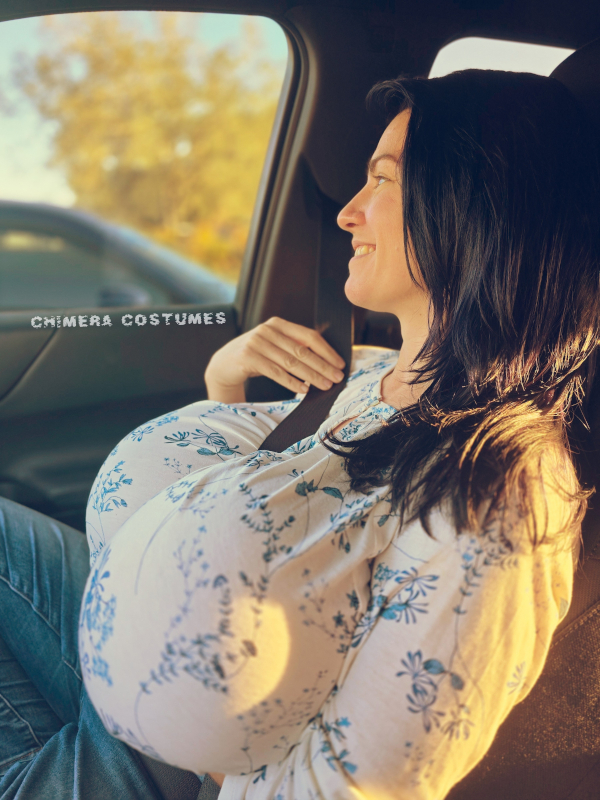
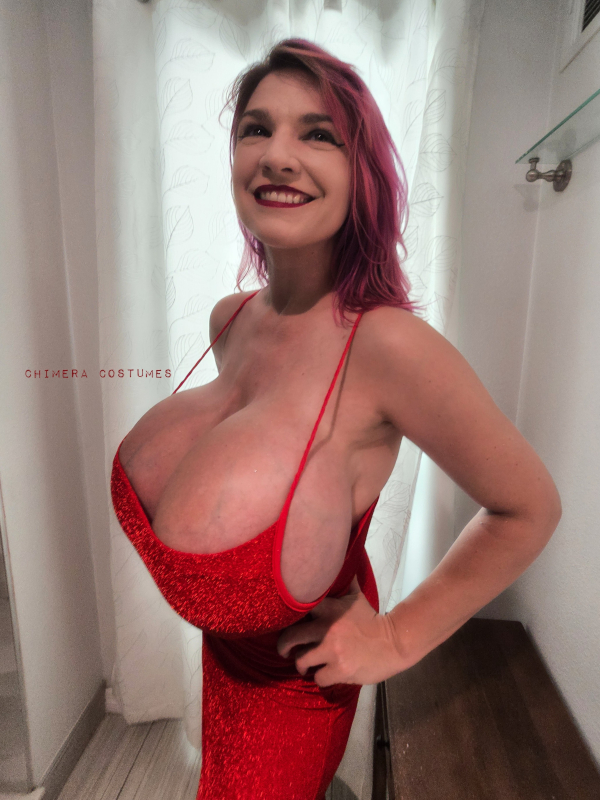
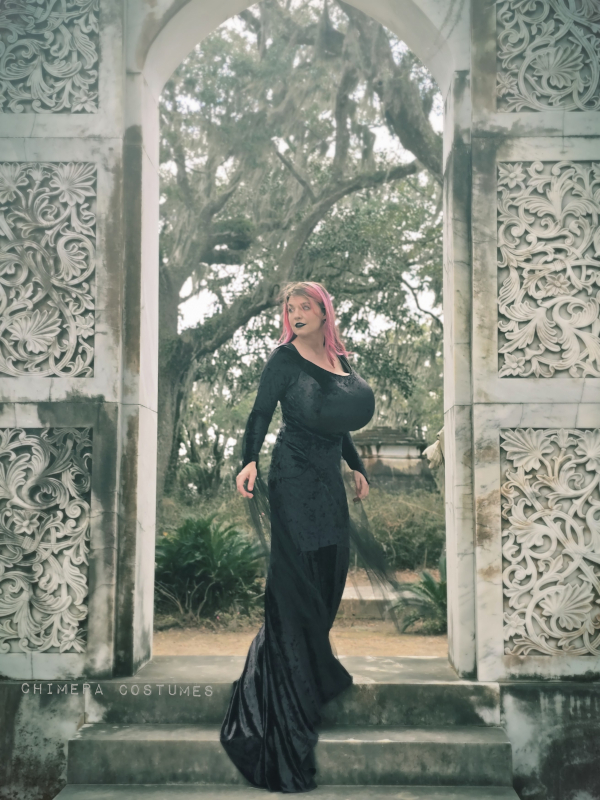
★ Featured Creator
4,700cc • Punta Gorda, FL • Master Seamstress
Heidi Lange builds extraordinary dark fantasy costumes entirely from scratch — shadow elves, vampire queens, gothic sorceresses. Her 4,700cc implants make her one of the most visually spectacular busty cosplay creators anywhere. Her adult content is 18+.